

Commercial buildings in Idaho are changing. Business owners are no longer looking for structures that only solve short-term storage or operational needs. Today, companies want buildings that can adapt, scale, and remain functional as operations grow over time. That shift has made commercial building planning much more important than it used to be.
At the same time, Idaho businesses are facing increasing pressure to maximize efficiency, protect equipment, improve workflow, and control long-term operating costs. Traditional commercial construction methods can sometimes create limitations when flexibility becomes important later.
That is one reason commercial pole barn construction continues gaining attention across Idaho. Businesses are looking for structures that provide open layouts, long-term durability, faster construction timelines, and practical functionality without unnecessary complexity.
In this guide, we’ll break down why many Idaho businesses choose MQS Barn for commercial pole barn construction, what companies should prioritize during the planning process, and why long-term flexibility often matters more than many owners initially realize.
Many Idaho businesses choose commercial pole barn construction because it provides flexibility, durability, open interior layouts, and long-term operational efficiency for a wide range of industries.
- Open layouts improve workflow flexibility.
- Businesses increasingly need buildings that can evolve over time.
- Operational efficiency now plays a larger role in commercial design.
- Post frame buildings adapt well to future expansion needs.
- Long-term planning usually creates better operational value.
Commercial pole barns are no longer viewed as simple utility structures. Many businesses now see them as long-term operational investments that support future growth and changing workflow demands.
- What’s Changing in Commercial Building Construction?
- Common Challenges Businesses Face During Commercial Building Projects
- The Long-Term Commercial Flexibility Framework
- Why Post Frame Construction Works Well for Commercial Buildings
- Before Starting a Commercial Pole Barn Project
- Frequently Asked Questions
What’s Changing in Commercial Building Construction?
Commercial construction needs have evolved quite a bit over the last several years. Idaho businesses are asking far more from their buildings than they once did.
Many commercial properties now need to support multiple operations at the same time. A structure originally designed for equipment storage may later require office space, service bays, inventory organization, workshop areas, or additional vehicle storage. That flexibility has become extremely important for businesses trying to grow without constantly relocating or rebuilding.
Workflow has also become a major priority. Business owners are paying much closer attention to how equipment moves through the building, how loading areas function, and how daily operations flow from one space to another. Poor layouts can create long-term inefficiencies that affect productivity every single day.
At the same time, more companies are thinking ahead. Many Idaho businesses now want buildings that can adapt to future staffing, larger equipment, expanded inventory, or changing operational demands. That shift has made post frame commercial construction especially appealing.
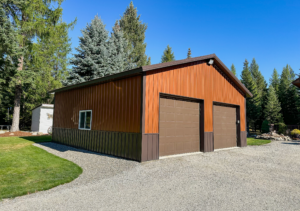
Common Challenges Businesses Face During Commercial Building Projects
One of the biggest mistakes business owners make is focusing too heavily on immediate needs instead of long-term functionality.
A building that feels oversized during construction can become surprisingly crowded once operations evolve. Additional equipment, expanding inventory, larger vehicle fleets, and operational growth often arrive faster than expected.
Another common issue is prioritizing price over long-term usability. Lower pricing may initially look attractive, but weak planning can eventually create:
- Operational bottlenecks
- Limited equipment access
- Poor storage flow
- Expansion limitations
Workflow problems are also extremely common in commercial spaces. Poor layouts can slow operations, reduce maneuverability, and create unnecessary daily frustration for employees and management alike.
Most of those problems begin during the planning phase rather than during construction itself.
The Long-Term Commercial Flexibility Framework
One of the best approaches to commercial building planning is focusing on adaptability and operational efficiency from the very beginning.
At MQS Barn, our Clark County commercial barn builders encourage business owners to think beyond immediate square footage and consider how the building may function years down the road.
Step 1: Prioritize Open Interior Space
Open layouts create significantly more flexibility for commercial operations.
Post frame construction allows for larger clear spans with fewer interior load-bearing walls. That creates more usable interior space, easier equipment movement, and better adaptability as operations evolve over time.
Step 2: Design Around Daily Workflow
Commercial buildings should support efficient movement every day.
That includes:
- Vehicle access
- Inventory flow
- Equipment maneuverability
- Workspace accessibility
- Loading and unloading operations
Operational flow often affects long-term productivity far more than many owners initially expect.
Step 3: Plan for Future Expansion
Most businesses eventually grow beyond their original expectations.
Planning ahead for additional storage, larger equipment, expanded operations, or future office space helps reduce expensive modifications later.
Step 4: Focus on Long-Term Durability
Commercial buildings experience constant daily use. Structures must handle heavy traffic, changing seasonal conditions, equipment movement, and long operating hours without becoming difficult to maintain.
Durability matters just as much as appearance.
Why Post Frame Construction Works Well for Commercial Buildings
Post frame construction continues becoming one of the most practical commercial building solutions for Idaho businesses because it balances flexibility, durability, and operational efficiency extremely well.
Many companies appreciate the open interior layouts, faster construction timelines, and ability to customize the building around specific operational needs. Larger overhead door options, easier future modifications, and flexible floorplans all make post frame buildings attractive for growing businesses.
That adaptability works especially well for companies that expect operational changes over time.
Many Idaho business owners also appreciate being able to work with a Clark County commercial structure builder to create layouts that fit their workflow. This is a far better solution than forcing operations into rigid building designs that become restrictive later.
Before Starting a Commercial Pole Barn Project
Focus on Operations First
A building should support how the business actually functions every day.
Workflow, storage organization, employee movement, loading access, and equipment flow all play major roles in long-term operational efficiency.
Build for Future Growth
Most businesses eventually expand in some way. Planning slightly larger during the initial project often creates much better long-term flexibility and value.
Think Carefully About Equipment Access
Door sizes, overhead clearance, parking flow, and maneuverability all affect daily commercial operations significantly. Commercial pole barn builders should always make those details a part of the early planning process.
Prioritize Practical Layout Planning
Good layouts improve productivity, safety, efficiency, and long-term adaptability. Small planning decisions often create major operational advantages later.
Future Outlook for Commercial Pole Barn Construction
Commercial pole barn construction will likely continue growing across Idaho as businesses place greater emphasis on flexibility and operational efficiency.
Several trends are already becoming more common:
- Multi-purpose commercial facilities
- Larger open-span layouts
- Hybrid office and operational spaces
- Expanded equipment storage integration
- Greater focus on future adaptability
Businesses are increasingly hiring commercial barn builders for long-term infrastructure investments instead of choosing simple storage structures.
We believe that shift will likely continue.
Frequently Asked Questions
Why are pole barn commercial builders becoming more popular?
Businesses appreciate the flexibility, open layouts, faster construction timelines, and long-term adaptability that commercial pole frame builders provide.
Can commercial pole barns support multiple business functions?
Yes. Many commercial pole barns now combine storage, office space, workshops, equipment areas, and operational space within the same structure.
Why is workflow important in commercial building design?
Efficient layouts improve productivity, equipment movement, employee access, and overall operational efficiency.
Are post frame commercial buildings durable?
Yes. Post frame buildings are designed to handle long-term commercial use, equipment traffic, and changing operational demands.
Why do Idaho businesses prioritize flexibility in commercial buildings?
Business operations often evolve over time. Flexible buildings allow companies to adapt more easily without major reconstruction later.

Start Planning a Commercial Building That Supports Long-Term Growth
The best commercial buildings are usually the ones that remain functional as operations evolve. Workflow efficiency, flexibility, durability, and long-term planning matter far more than simply maximizing square footage.
At MQS Barn, we help Idaho businesses design practical commercial pole barn buildings built around real-world operational needs and future adaptability. Whether you are planning equipment storage, service operations, inventory space, workshop facilities, or a multi-purpose commercial building, our team can help you explore solutions designed around your long-term business goals.
Contact MQS Barn today to request a consultation or learn more about commercial pole barn construction options for your Idaho property.
